
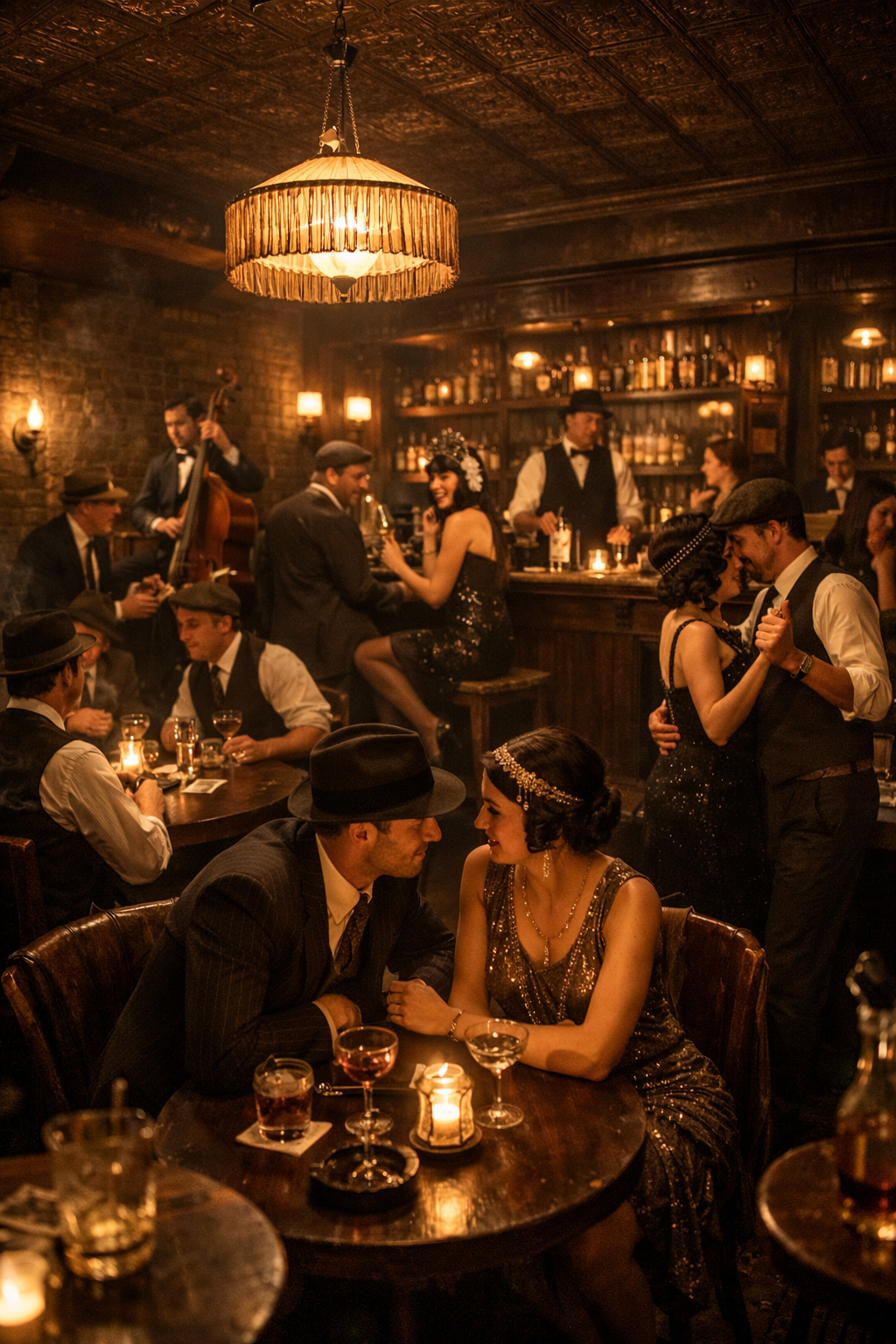
Speakeasies were a defining feature of American social life during the Prohibition era, which lasted from 1920 to 1933.
When the 18th Amendment made the manufacture, sale, and transportation of alcohol illegal, demand for drinking did not disappear. Instead, it went underground—literally and figuratively—giving rise to speakeasies. These secret bars operated in basements, back rooms, and behind unmarked doors, often disguised as soda shops, restaurants, or private clubs.
The name “speakeasy” came from the need to speak quietly about such places to avoid detection by law enforcement. Entry usually required a password, a knock sequence, or personal connections, creating an atmosphere of secrecy and exclusivity. Despite their hidden nature, speakeasies were widespread. Major cities like New York and Chicago had thousands in operation at the height of Prohibition.
Speakeasies played a major role in shaping modern nightlife. They were among the first social spaces where men and women drank together publicly, and they helped popularize jazz music and dance culture. However, they were also closely tied to organized crime, as bootleggers and gangsters supplied illegal alcohol and bribed officials. Ultimately, the prevalence of speakeasies demonstrated the difficulty of enforcing Prohibition and contributed to its repeal with the 21st Amendment.
Now, the speakeasy is a fun place to enjoy cocktails and fun times with friends. Click the link to book at reservation at Barrel and Bond.